
01 Accident Prevention and Direct Protection for Artisanal Fishers
Early warning systems and technology to keep fishers safe while protecting sharks.
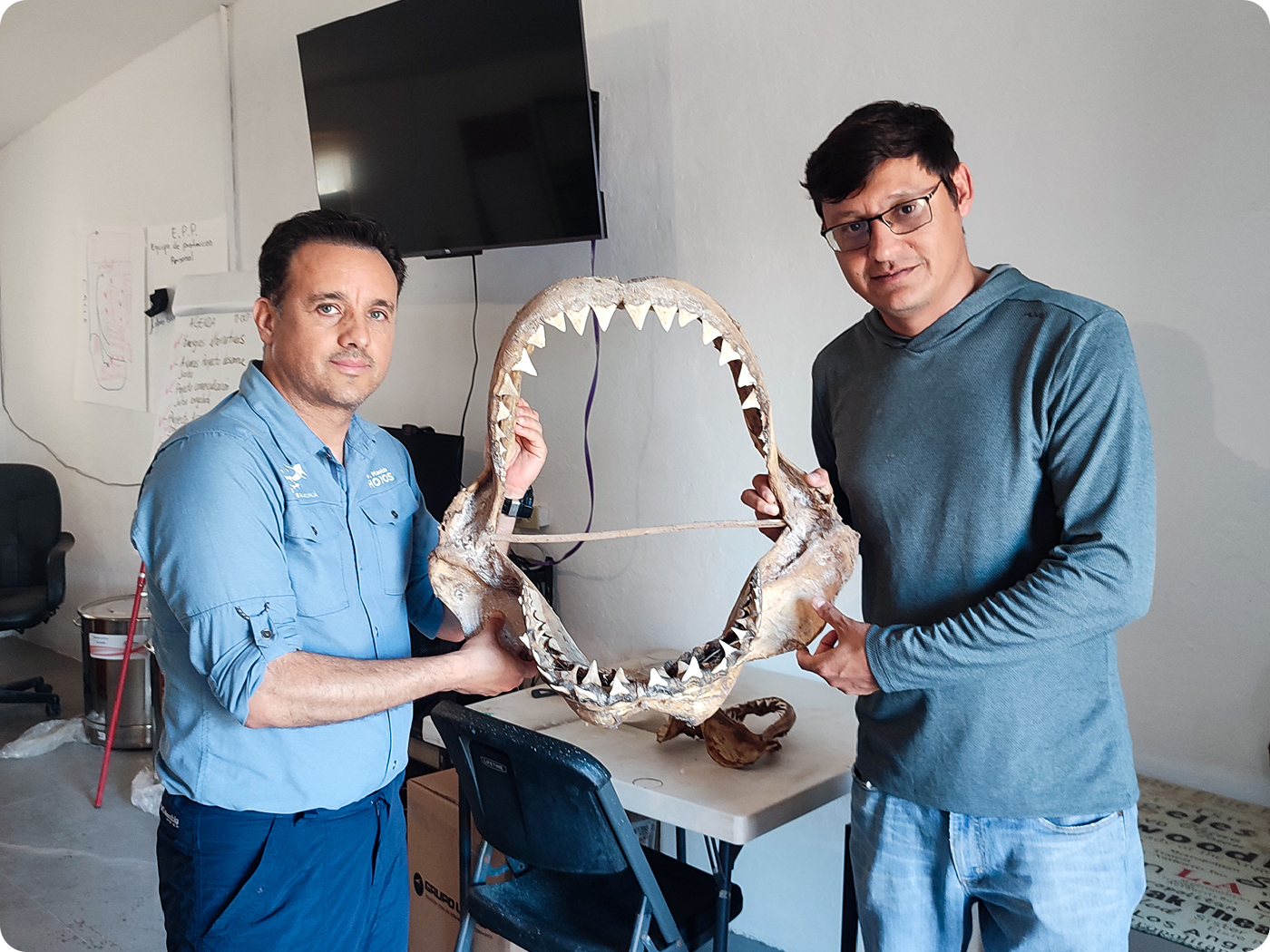
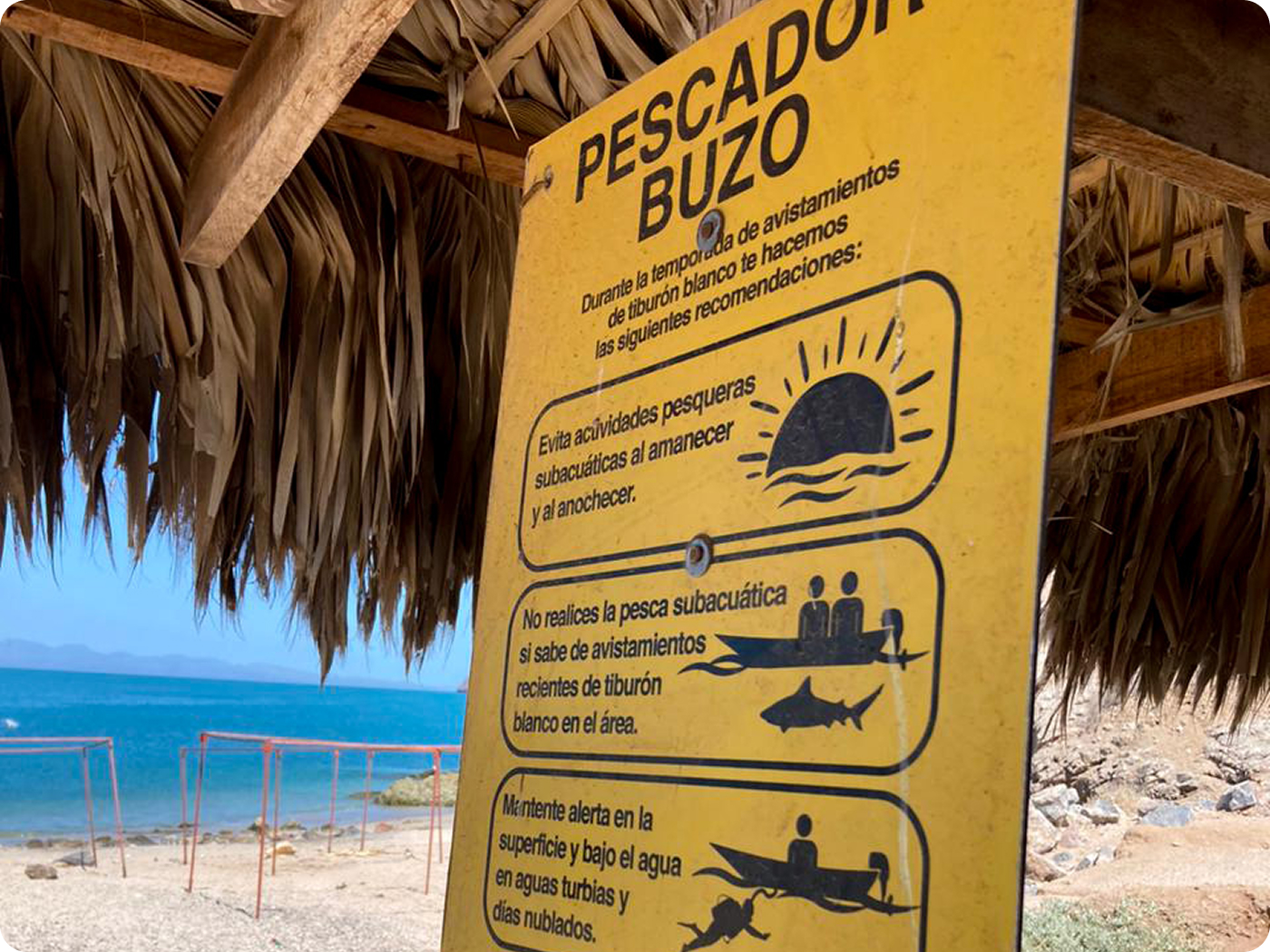
One of the main social benefits of this project is reducing the risk of dangerous encounters between white sharks and divers, particularly along the Sonora coast, where callo de hacha fishers have reported interactions with large females. These types of incidents not only endanger the divers’ lives but can also result in legal or media consequences if a white shark is harmed, as it is a protected species. The project proposes the use of advanced technologies such as satellite tags (Finmount, PSAT) and acoustic telemetry, which will allow real-time detection of tagged sharks in active fishing zones. This information will be used to establish early warning systems specifically designed to alert cooperatives and local divers about the presence of pregnant females in their work areas.
These prevention tools will enable fishers to make informed decisions—whether by temporarily relocating their activities, taking additional precautions, or better planning their trips at sea. In doing so, the project protects the physical integrity of marine workers while promoting safe and respectful coexistence with the species. Furthermore, by demonstrating that the community is actively engaged in conflict prevention, their relationships with environmental authorities will be strengthened, and new opportunities for developing adaptive management programs will emerge—designed with and for the fishers. This transforms the fisher into a key conservation actor, not an enemy of the shark, breaking historical stigmas and building trust.
02 Environmental Education, Community Participation, and Knowledge Ownership
Turning scientific knowledge into community power and shared stewardship.
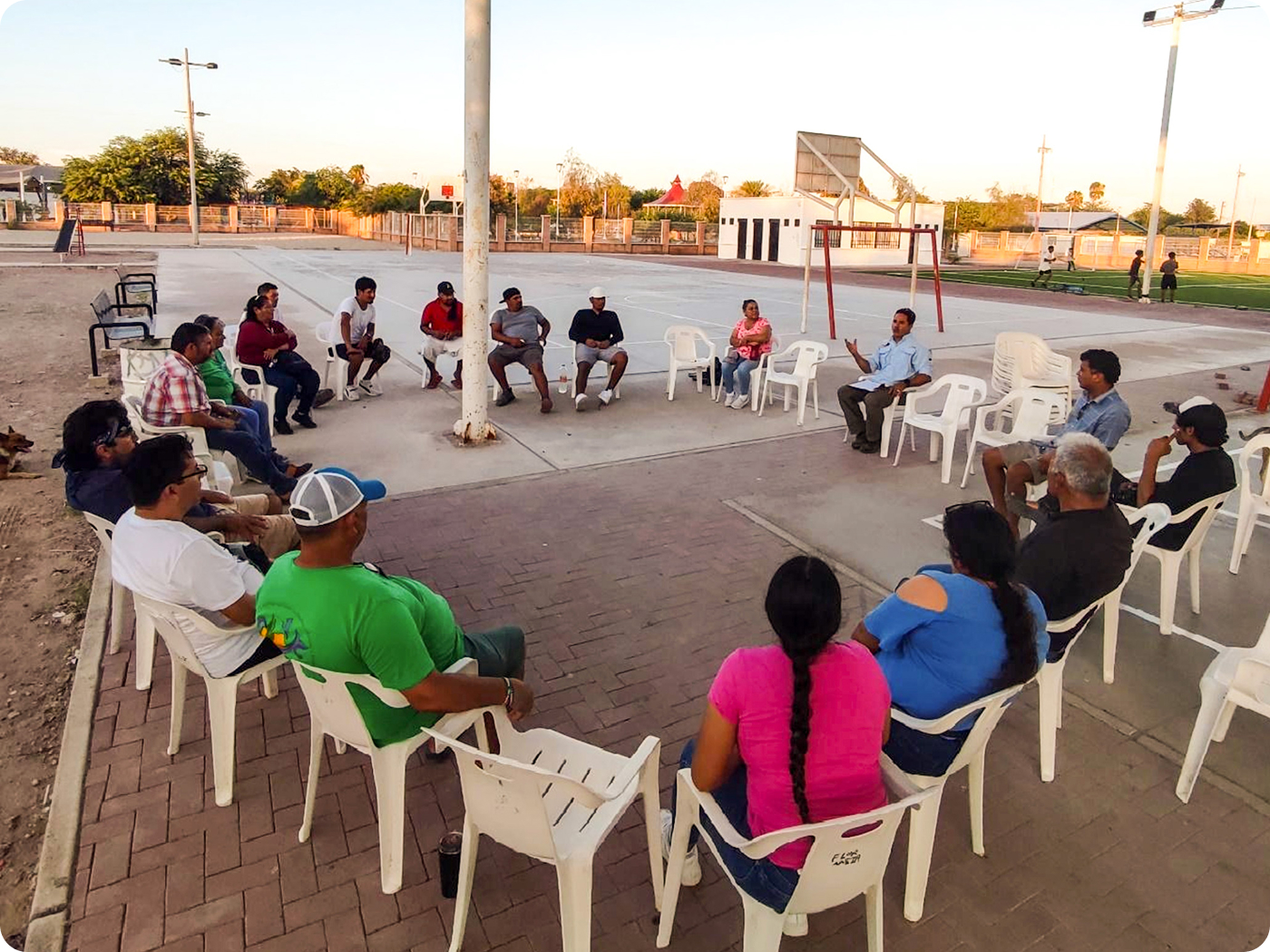
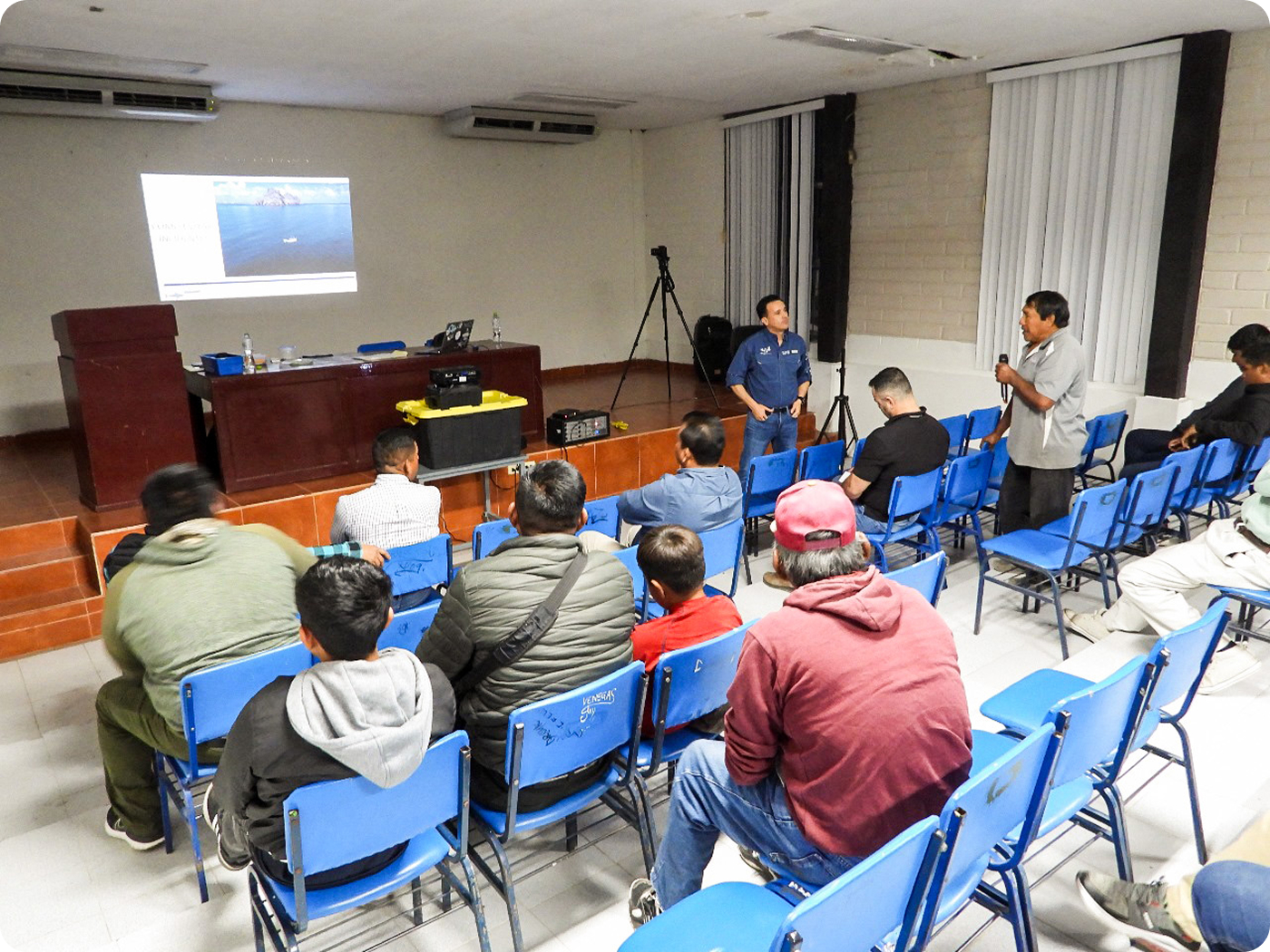
Another core component of the project is its focus on environmental education, knowledge transfer, and local participation. The scientific information generated—on white shark reproduction, movement, and behavior—will not be limited to academic publications but will be translated and shared with coastal communities, particularly those near monitoring areas such as Bahía de Kino, Puerto Peñasco, El Paredón, and Yavaros in Sonora, and Guadalupe Island in Baja California. Through workshops, community talks, visual materials, and meetings with cooperatives, an accessible and useful understanding of the results will be promoted, allowing fishers, youth, students, women, ejido authorities, and other actors to take ownership of the knowledge generated.
This educational process will help reframe the white shark not as a threat, but as an indicator of ecosystem health, positioning communities as strategic allies in science and conservation. Additionally, direct contact with national and international researchers will strengthen bonds between science and society, generating local pride, regional visibility, and potential future opportunities for training, employment, or collaboration. In a context where many management decisions are made far from the ocean, this project bridges that gap—creating real connections between marine science and those who live by, depend on, and protect the sea.
Take Action Today
 Donate
Our work is only possible with your support! Your donation will contribute to our shark research and conservation programs in Mexico
 Adopt
Adopt
Through the adopt a shark program, anyone can symbolically sponsor a shark for themselves, a loved one or together as a company, school group or university
 Donors
Recognizing the generous organizations whose continued support drives our shark conservation, research, and education initiatives forward