
01 Safeguarding White Sharks and Their Critical Habitats
The white shark is vital for healthy marine ecosystems but faces threats from bycatch, habitat loss, and unmanaged tourism. Through science, legal protection, and habitat monitoring, we work to safeguard this vulnerable species.
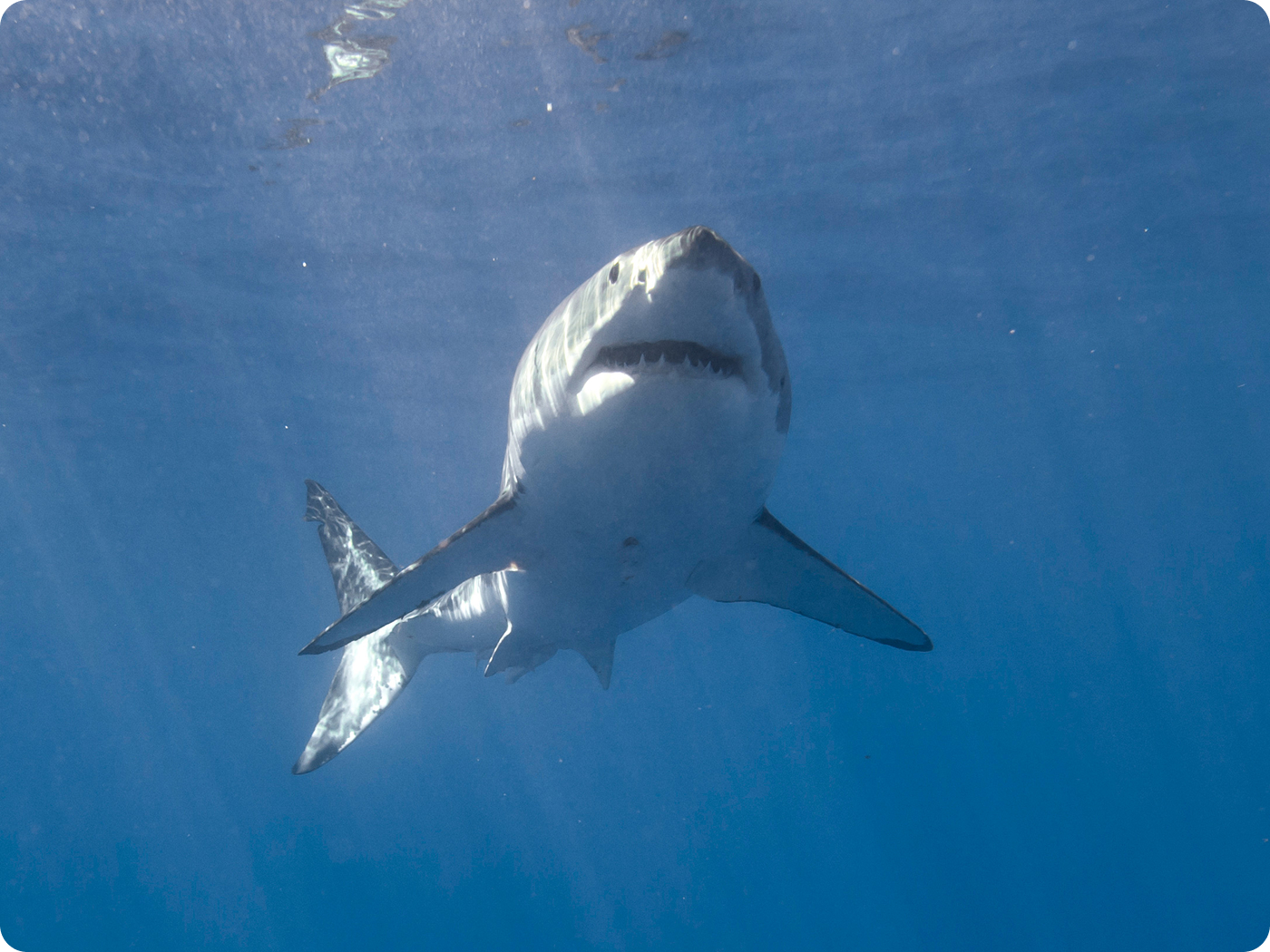
Legal Protection and Ecological Value of the White Shark
The white shark (Carcharodon carcharias) plays a fundamental role as an apex predator in marine ecosystems, regulating prey populations and helping maintain the ocean’s ecological balance. From early life stages, its trophic role directly impacts the health of the ecosystems it inhabits. Recognizing its importance and vulnerability, the species is listed as Vulnerable by the IUCN and its trade is regulated under the CITES Convention. In Mexico, NOM-029 prohibits its capture, retention, and commercialization, making the country one of the most active defenders of the species. However, threats persist, particularly incidental capture, entanglement in passive fishing gear, poorly managed tourism, and the degradation of critical coastal zones. Therefore, white shark conservation requires action beyond the regulatory framework: it needs applied scientific research, field monitoring, data generation, and cross-sector collaboration.
Identification and Protection of Critical Habitats
One of the most significant contributions of this project is the generation of scientific data on white shark breeding, feeding, and nursery areas in Mexican waters. Through non-invasive technologies such as ultrasounds, hormone analyses, satellite tagging (PSAT, Finmount), and acoustic telemetry, it will be possible to accurately identify areas used by pregnant females for movement, feeding, or possibly giving birth. This information is crucial for the design and implementation of Marine Protected Areas (MPAs), conservation corridors, or special management zones. In particular, the coast of Sonora has emerged as a new biologically significant area, where interactions with large females have been recorded. The hypothesis that some of these sharks come from Guadalupe Island during their reproductive cycle reinforces the importance of understanding their migratory patterns. These data will enable agencies such as CONANP, SEMARNAT, and the scientific community to develop evidence-based measures to protect the most sensitive habitats.
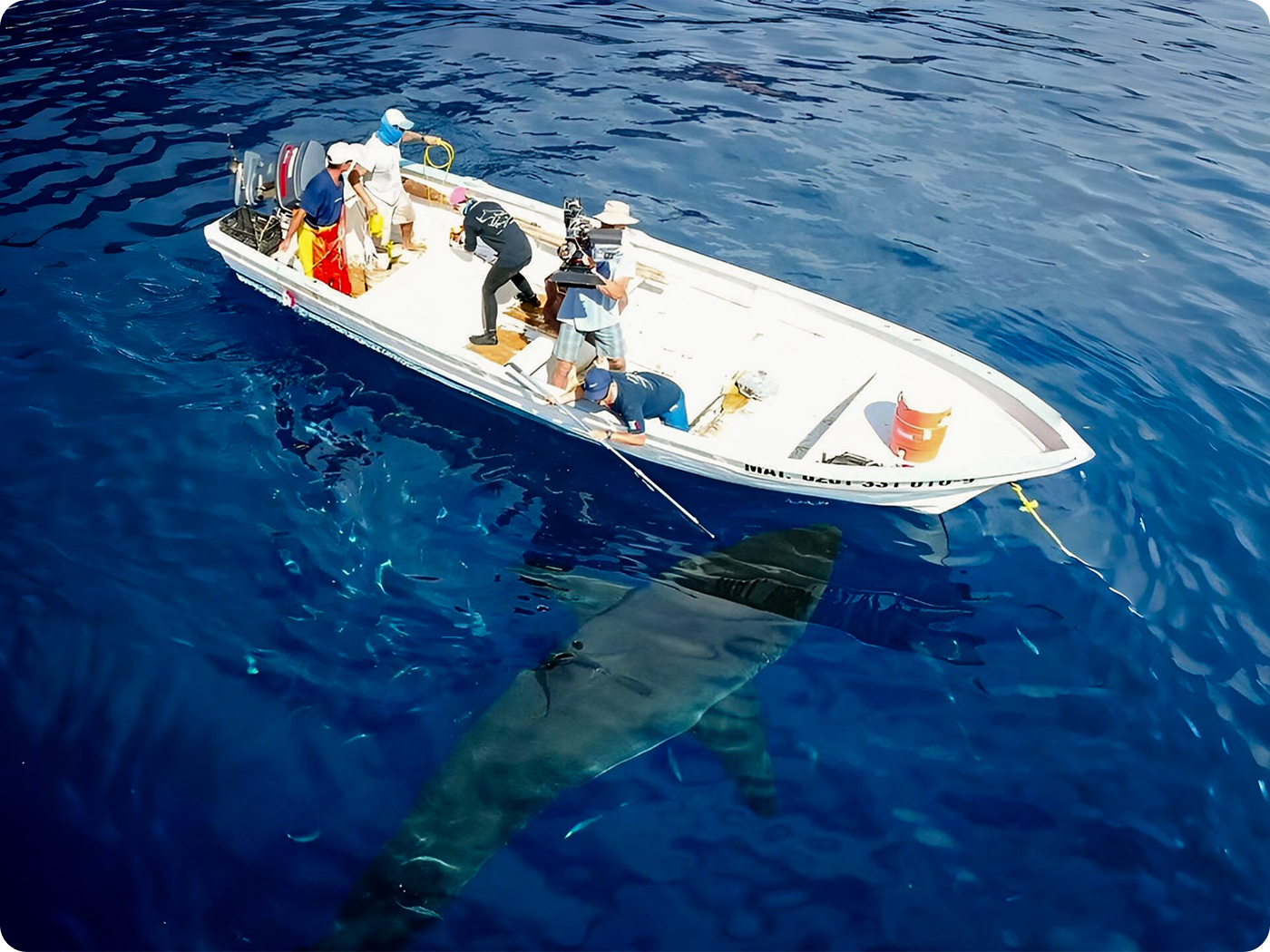

Conflict Prevention and Local Stakeholder Participation
Beyond ecological knowledge, this project includes a strong socially inclusive conservation component, especially with artisanal fishers working in areas where white shark interactions have occurred—such as callo de hacha (pen shell) divers in Sonora. The creation of real-time satellite-based early warning systems is proposed to detect the presence of adult females in high-risk areas. This not only protects the white shark but also reduces occupational risks and prevents unwanted incidents for local fishers. Additionally, the project’s findings will be shared with environmental authorities, the fishing sector, and the general public, and will be integrated into existing management frameworks such as CONANP’s 2020-updated Action Program for the Conservation of Priority Species—White Shark (PACE-TB). Dialogue spaces with communities will be promoted to ensure conservation strategies are viable, effective, and built collaboratively.
White Shark Conservation and Safety Program
Support shark preservation in marine nursery areas
Take Action Today
 Donate
Our work is only possible with your support! Your donation will contribute to our shark research and conservation programs in Mexico
 Adopt
Adopt
Through the adopt a shark program, anyone can symbolically sponsor a shark for themselves, a loved one or together as a company, school group or university
 Donors
Recognizing the generous organizations whose continued support drives our shark conservation, research, and education initiatives forward